Few renovation decisions generate as much back-and-forth as flooring. Hardwood has decades of reputation behind it. Vinyl plank has spent the last several years quietly getting very good. The conversation has shifted — and so has the honest answer to which one makes more sense.
We install both. We’ve put hardwood in living rooms where it’s been exactly the right call and vinyl plank in basements and mudrooms where hardwood would have failed within two seasons. The right choice depends on where the floor is going, how the space is used and what you’re expecting from it over the next ten to twenty years.
Here’s the breakdown — without the sales pitch in either direction.
What Hardwood Actually Is
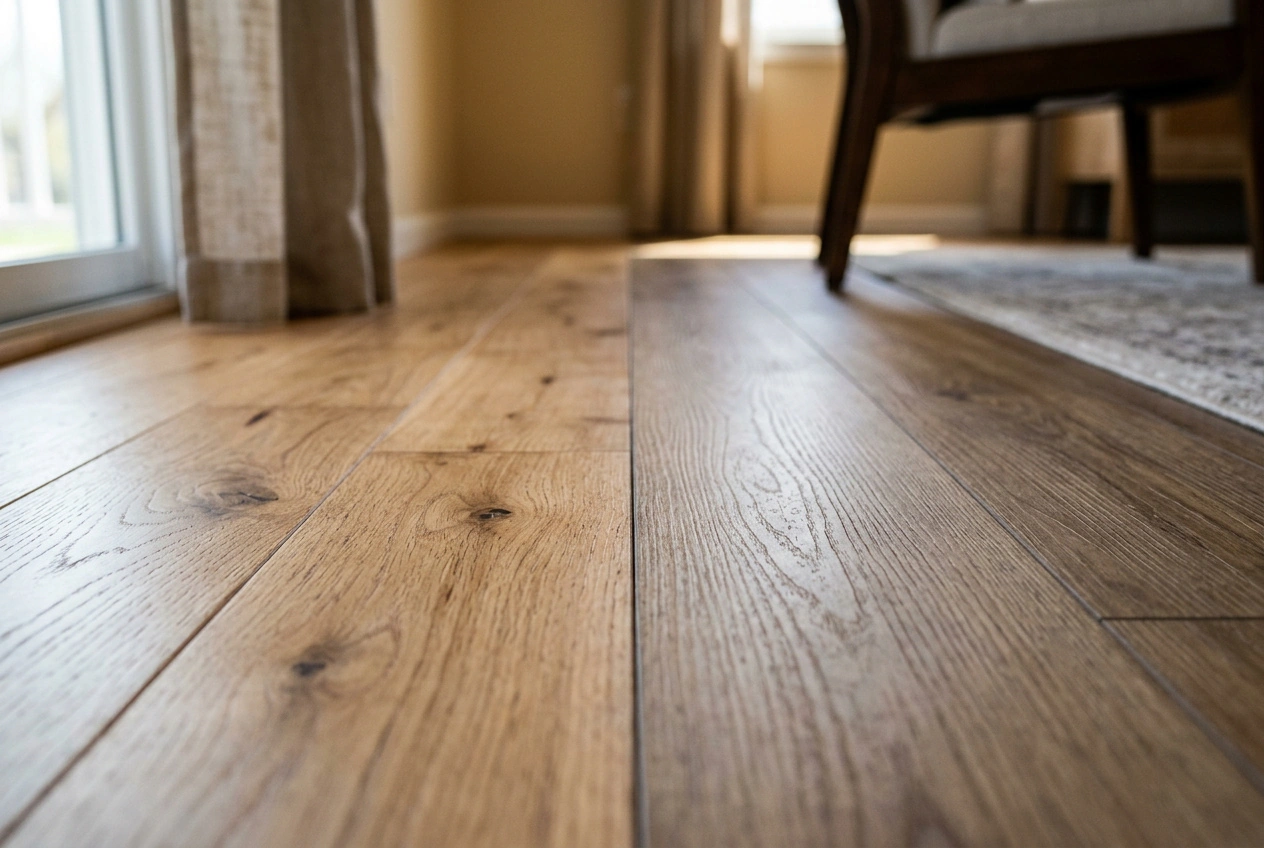
Hardwood flooring comes in two main forms: solid hardwood and engineered hardwood. The distinction matters more than most homeowners realize when they’re comparing options.
Solid hardwood is exactly what it sounds like — a single piece of milled wood from top to bottom, typically ¾ of an inch thick. It’s durable, refinishable multiple times over its lifespan and carries the warmth and character that people associate with real wood floors. The trade-off is that solid wood moves with moisture. It expands in humid conditions and contracts when the air is dry. That movement means solid hardwood isn’t suitable for below-grade installations like basements and needs careful acclimation before installation in any space.
Engineered hardwood is a real wood veneer bonded to a plywood core. It looks identical to solid hardwood from the surface and can be refinished one or two times depending on the veneer thickness. The plywood construction makes it more dimensionally stable — less prone to movement with humidity changes — which opens up more installation contexts, including some basement applications with proper moisture control.
Both are genuine wood products. Both bring warmth and visual depth that photographs well and reads as quality in a home. And both require more maintenance and more careful installation conditions than vinyl plank.
What Vinyl Plank Has Become
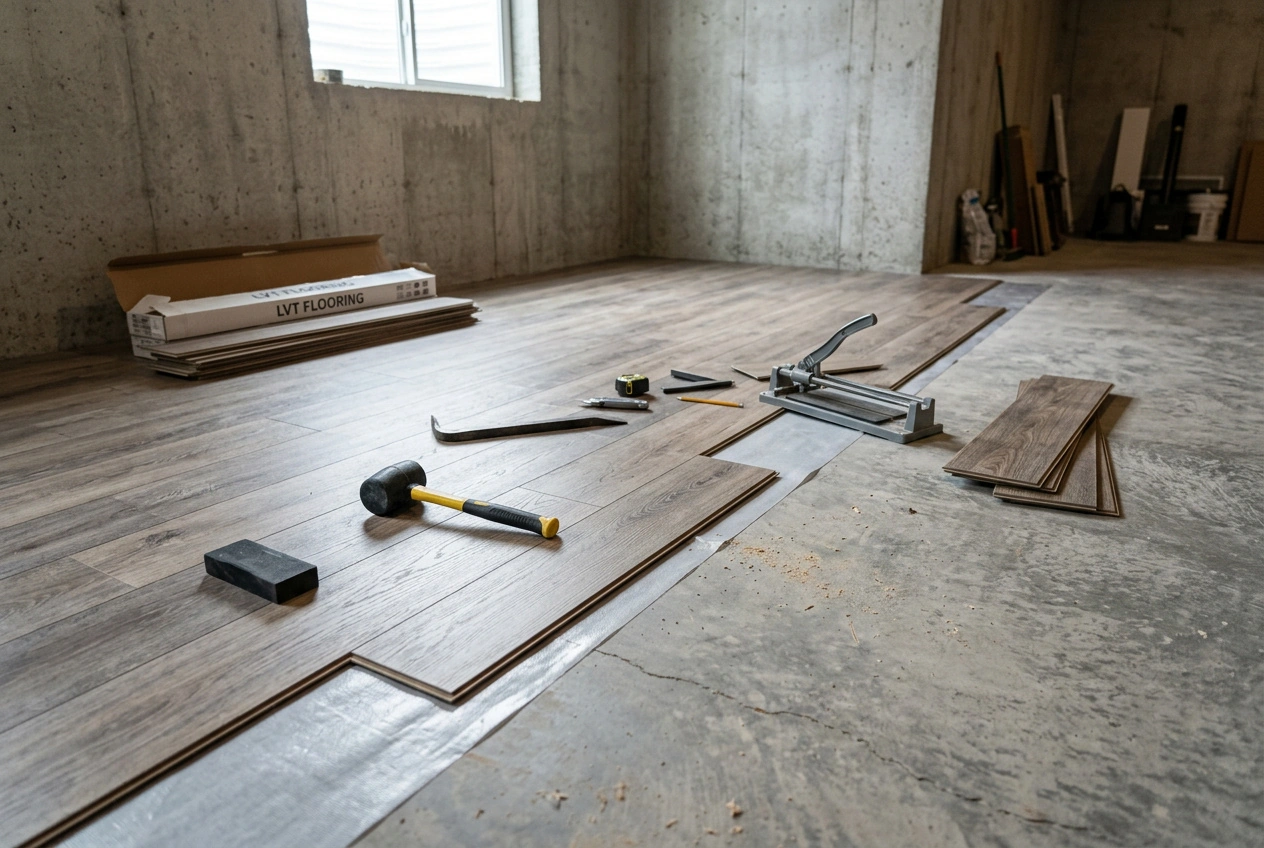
Luxury vinyl plank — LVP — has improved significantly over the last decade. The products available now are not the vinyl flooring of twenty years ago. Modern LVP is thicker, more realistic in texture and pattern and more durable underfoot than earlier generations.
The core is 100 percent synthetic — either a rigid core or a flexible core depending on the product — with a photographic layer that replicates wood grain and a wear layer on top that protects against scratching and surface damage. Better products have a wear layer of 12 mil or more, which holds up well under heavy residential use. Lower-end products with thin wear layers show damage faster and are worth avoiding.
LVP is fully waterproof, which changes the calculation entirely for kitchens, bathrooms, laundry rooms and basements. It installs as a floating floor over most existing subfloors and handles the temperature and humidity fluctuations that are common in Trent Hills homes — particularly in spaces over unheated garages or below grade. Installation is faster than hardwood and the floor is ready to use immediately.
The honest limitation is longevity. A quality hardwood floor, properly maintained and refinished, can last 50 to 100 years. LVP has a realistic lifespan of 15 to 25 years under normal residential use. It can’t be refinished — when the wear layer goes, the floor gets replaced. That’s a real difference for homeowners thinking about the long term.
How Trent Hills’s Climate Affects the Decision
Trent Hills’s climate puts specific demands on flooring that don’t always come up in general comparisons. Winters are dry and cold. Summers are humid. The swing between seasons puts wood floors through significant moisture cycles every year.
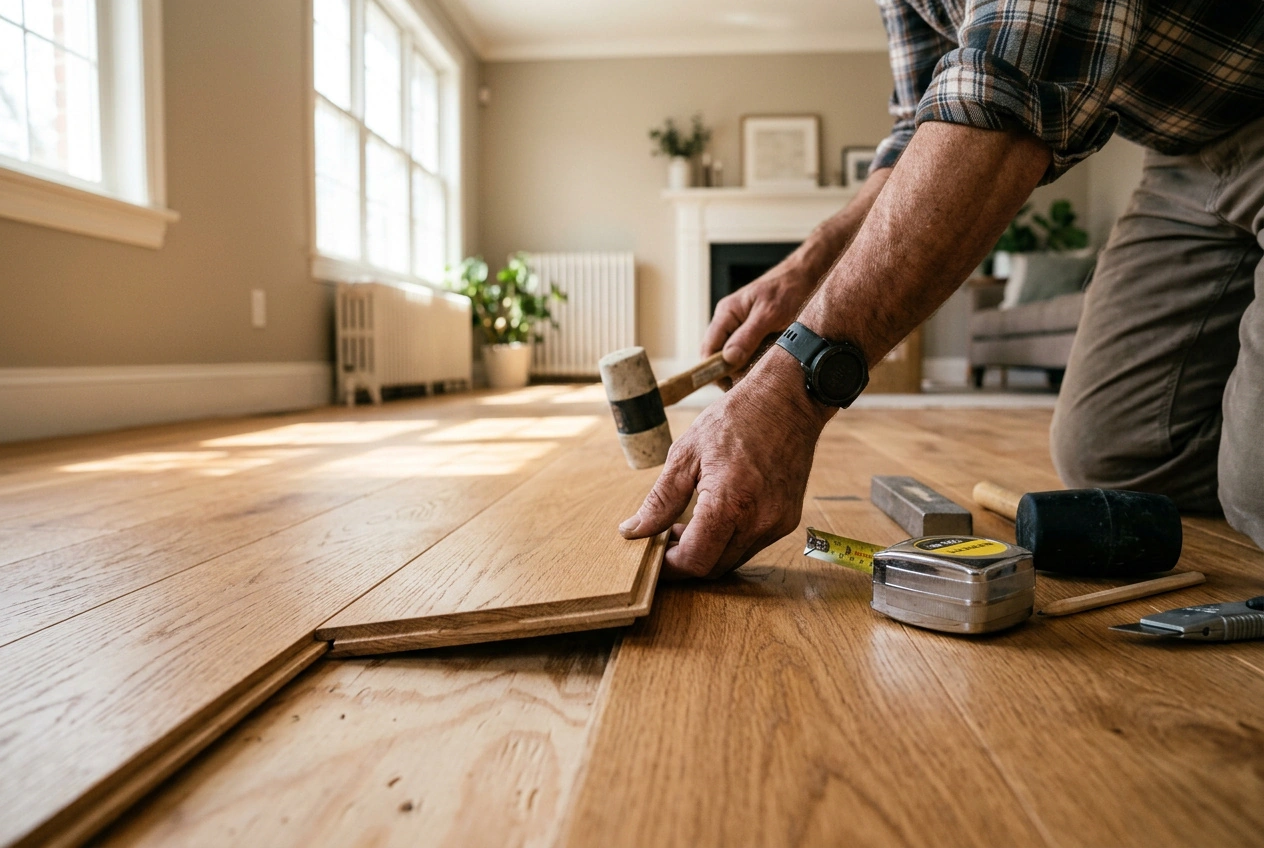
Solid hardwood in a main-floor living space with consistent heating and humidity control handles this well over time. The same floor installed over a basement slab or in a sunroom with temperature swings will move, cup and gap in ways that are difficult to manage. We’ve seen hardwood installations fail in Trent Hills homes not because the product was wrong but because the installation location wasn’t suitable for it.
Vinyl plank doesn’t have these concerns. It doesn’t move with humidity, it doesn’t cup or gap seasonally and it doesn’t care what’s happening below the subfloor in terms of moisture. For the parts of a Trent Hills home that are most vulnerable to moisture and temperature variation — basements, mudrooms, main-floor kitchens — LVP is the more practical material regardless of aesthetic preference.
Cost – What You’re Actually Comparing
Hardwood costs more — in material, in installation and in ongoing maintenance. That’s true across the board. But the comparison is more useful when you break it down by what drives each cost.
Hardwood material costs more per square foot than most LVP options. Installation takes longer because it involves acclimatization, nailing or gluing to the subfloor and careful fitting around transitions. Finishing and refinishing over the floor’s lifespan adds to the total cost of ownership — though that’s also what extends the lifespan dramatically.
LVP is less expensive to purchase and faster to install. The floating installation method means less labour time and no adhesive or nails in most cases. Over a 15 to 20-year horizon, the lower upfront cost may be offset by the need for replacement, particularly if material costs have risen by the time the floor needs to go.
For homeowners renovating with resale in mind, hardwood in main living areas tends to hold perceived value better. For homeowners prioritizing practicality and lower upfront cost, LVP delivers a quality result at a more accessible price point.
One thing worth noting: subfloor condition affects both products but in different ways. Hardwood requires a flat, dry, structurally sound subfloor — any movement or deflection shows up in the finished floor over time. LVP tolerates minor imperfections better but still needs a reasonably flat surface. We assess the subfloor before recommending any product because what’s underneath the floor determines how long it will perform. We’ve seen new hardwood installations develop problems within a year because the subfloor wasn’t addressed first.
Maintenance Over Time
This is an area where the two products genuinely differ and where homeowners sometimes underestimate what they’re signing up for.
Hardwood needs to be swept or vacuumed regularly to prevent grit from scratching the surface. It needs to be refinished every 7 to 10 years in high-traffic areas — sometimes less frequently in bedrooms or low-use spaces. Spills need to be cleaned up quickly because standing water can cause cupping and staining. Felt pads under furniture legs are not optional.
Done well, that maintenance extends the floor’s life for decades. Neglected, hardwood shows its age fast — scratches accumulate, the finish dulls and the floor can start to look worn within five years in a busy household.
LVP is lower maintenance by design. The wear layer resists scratching better than most hardwood finishes in day-to-day use and spills can sit without causing damage. It still needs regular cleaning and furniture pads still help, but the margin for error is wider. For households with dogs, kids or both, that margin matters.
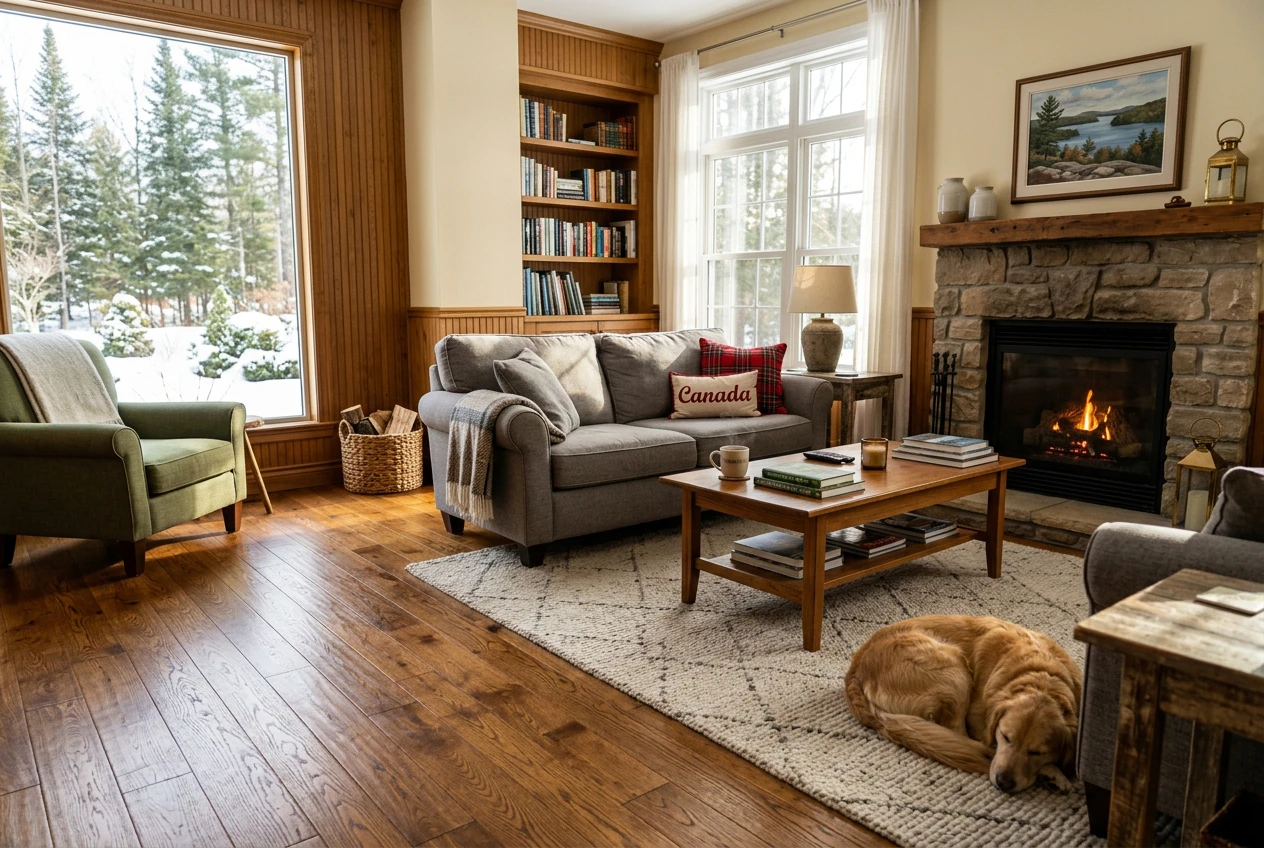
Which Spaces Each One Suits
This is where the decision usually becomes clearer. Instead of choosing one product for the whole house, most renovations benefit from using the right material in the right location.
Where Hardwood Makes Sense
- Main-floor living rooms, dining rooms and bedrooms with consistent temperature and humidity
- Spaces where long-term durability and refinishability are priorities
- Homes where resale value and perceived quality are driving the renovation
Where Vinyl Plank Makes More Sense
- Basements and below-grade spaces where moisture is a factor
- Kitchens, mudrooms and bathrooms where spills and standing water are possible
- Over radiant heat systems — engineered hardwood works here too, but LVP is more forgiving
- Rental properties or spaces where replacement cost matters more than longevity
Many of the homes we work on in Trent Hills end up with hardwood in the main living areas and LVP in the basement and utility spaces. That combination covers the full house without compromising either space.
What Renossance Does
We handle flooring installation across Trent Hills and the surrounding area — Campbellford, Hastings, Havelock, Marmora, Norwood, Warkworth and Stirling. Hardwood, engineered hardwood and luxury vinyl plank — we assess the subfloor, recommend the right product for the space and install it properly from the start.
We’re a general contractor service, insured and bonded, with 7+ years of hands-on experience in flooring and interior renovations. If you’re not sure which direction makes sense for your project, give us a call.

