Interior painting is one of those projects that sounds simple until you start pricing it out. A fresh coat of paint transforms a room faster than almost any other renovation — and yet the quotes homeowners receive for the same job can vary dramatically. Understanding why that is and what actually drives the cost, makes it a lot easier to evaluate what you’re being offered.
This guide covers the main factors that affect interior painting costs in Campbellford and the surrounding Trent Hills area, what’s included in a professional quote and where the real value comes from when you hire someone who knows what they’re doing.
What Makes Painting Costs Hard to Predict
The sticker price on a painting job is almost never the full picture. Two quotes for the same room can look completely different depending on what each contractor is actually including — and what they’re leaving out.
The biggest variables are preparation work and paint quality. A quote that looks low often reflects minimal prep: no patching, no priming, no proper masking. The paint goes on fast, looks fine for a few months and then the cracks show — literally. A quote that reflects real value includes surface preparation, quality materials and the time it takes to do the finish work properly.
We’ve walked into rooms after quick paint jobs where the walls looked great in photos and rough in person. Brush marks in the corners. Uneven sheen where primer was skipped over patched areas. Tape lines that bled because the masking wasn’t pressed down properly. None of these are catastrophic, but none of them are what a homeowner expects when they pay for a paint job. Preparation is where the quality of a painting job is actually decided — not at the finish coat.
What Affects the Cost of Interior Painting
Room Size And Ceiling Height
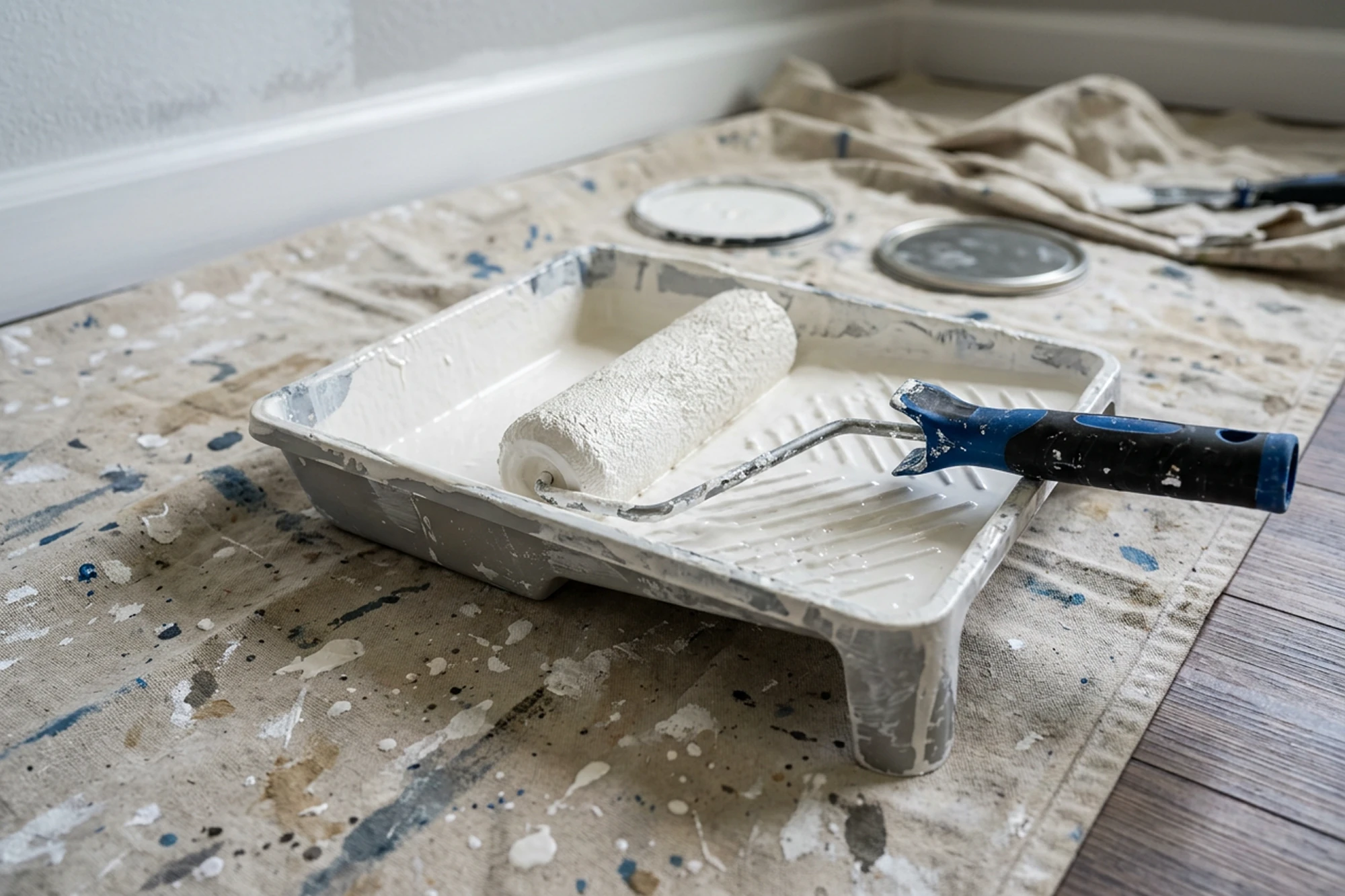
The most basic driver of cost is square footage — the more surface area, the more time and material. Standard 8-foot ceilings are faster to cut in than 9 or 10-foot ceilings, which require more ladder work and more careful edging. Cathedral ceilings and stairwells add complexity and time beyond what square footage alone captures.
A standard bedroom takes less time than an open-concept main floor of the same square footage because the main floor has more corners, more transitions between surfaces and often more trim to work around. Room count and layout matter as much as total area.
Surface Condition
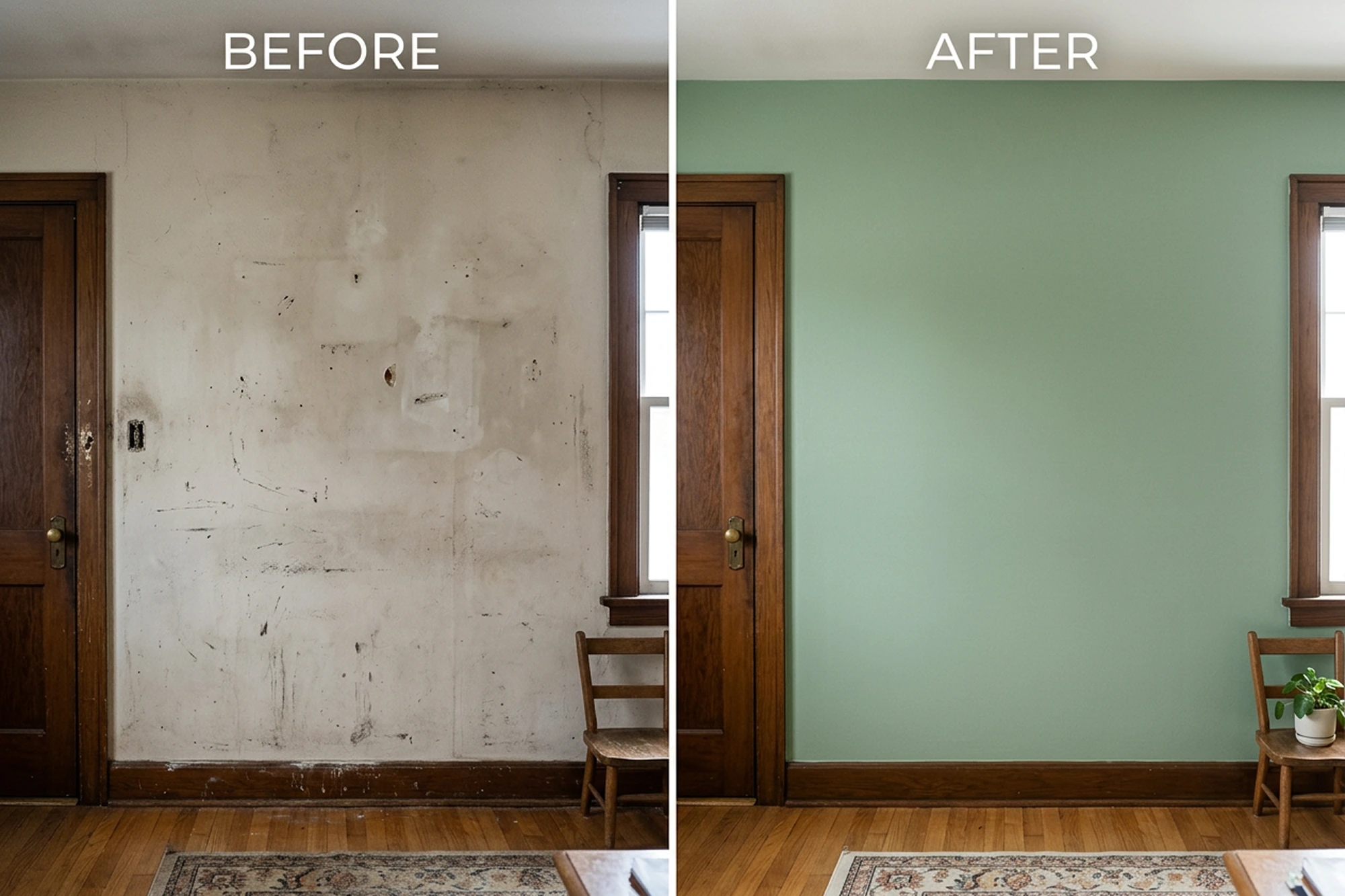
New drywall needs primer before paint. Walls with holes, cracks or water stains need patching and spot-priming before anything goes on. Walls with glossy paint need to be sanded or primed to give the new coat something to adhere to. Dark walls being painted light — or light walls being painted a saturated colour — often need multiple coats to achieve even coverage.
All of that takes time and material and it’s where corners tend to get cut on lower-cost quotes. We assess surface condition before quoting because it directly affects how much work the job actually requires. A room that looks paint-ready sometimes isn’t.
Paint Quality
Paint is not a commodity. The difference between a builder-grade paint and a quality finish coat shows — in coverage, in washability and in how the surface holds up over time. Higher-quality paints typically require fewer coats to achieve full coverage, which can partially offset the material cost, but they do cost more per litre upfront.
We specify paint quality based on what the surface needs and where it is in the home. High-traffic areas like hallways, kitchens and bathrooms benefit from a harder finish that cleans without marking. Bedrooms and living areas can use a softer sheen. Using the same paint everywhere is a sign that material cost is being minimized, not that the job is being optimized.
Number Of Colours And Finish Types
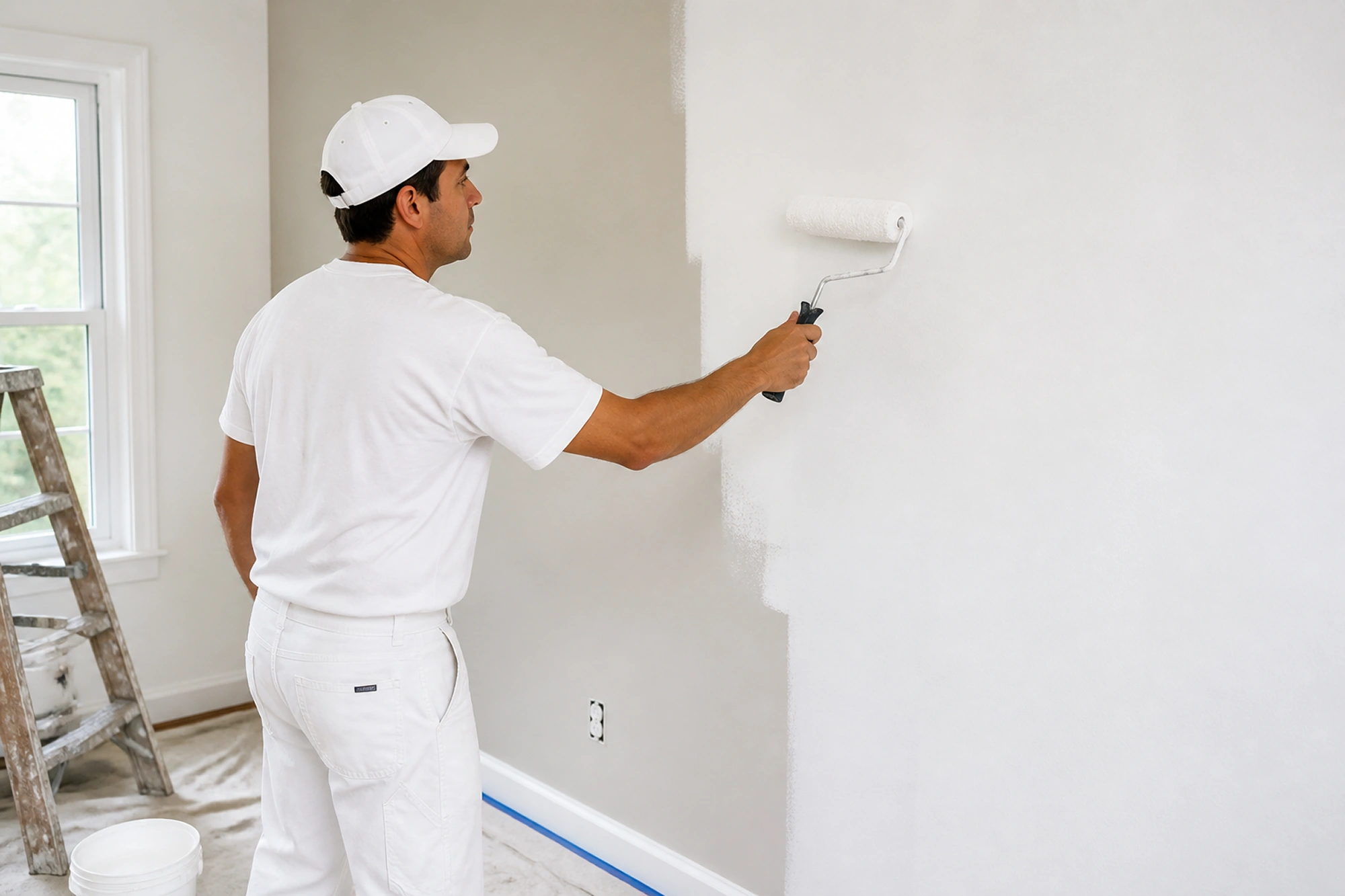
A single colour throughout a space is faster and simpler than multiple colours with clean transition lines between them. Feature walls, two-tone rooms and spaces where the ceiling colour differs from the walls all add time. Switching between sheens — flat on ceilings, eggshell on walls, semi-gloss on trim — requires separate passes and careful masking at each transition.
Trim, Doors & Ceilings
Walls are one thing. Trim, baseboards, door casings and ceilings are a separate scope that significantly changes the total cost of a painting project. Painting trim properly — sanding, priming where needed and cutting in cleanly against walls — takes more time per square foot than rolling walls. It’s also where the finish quality of a room is most visible. Sloppy trim work undermines a perfectly rolled wall every time.
What a Professional Quote Should Include
A quote for interior painting should be specific about what’s included. If it isn’t, ask. The line items that matter:
- Preparation: patching nail holes and minor damage, sanding glossy surfaces, priming where needed
- Masking: protecting floors, fixtures and surfaces that aren’t being painted
- Number of coats: one coat is rarely sufficient for a quality finish; two coats on walls is standard
- Paint brand and grade: what product is being used and why
- Trim and ceilings: whether these are included or quoted separately
- Clean-up: removing tape, cleaning up overspray, leaving the space usable
A quote that doesn’t specify these things isn’t a quote — it’s a number. When you’re comparing two painters, make sure you’re comparing the same scope.
DIY vs. Professional – The Honest Trade-Off
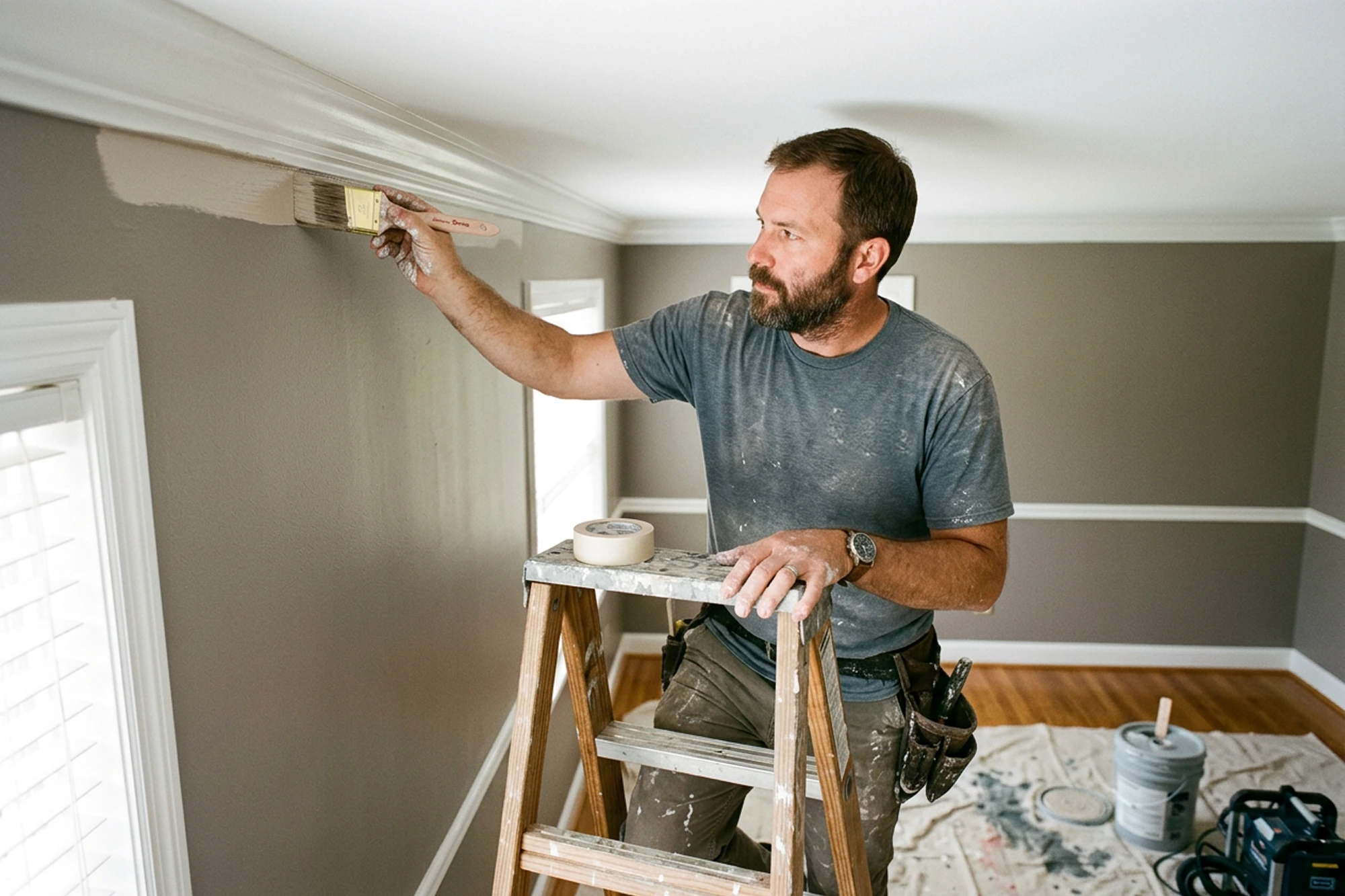
Painting is one of the more accessible DIY projects for homeowners who have the time and patience for it. The materials are available at any hardware store, the technique is learnable and a careful DIY job on a simple room can look great.
Where DIY tends to fall short is in the cut-in work — the edging along ceilings, trim and corners — and in large or complex spaces where fatigue affects the quality of the finish toward the end of the job. Professional painters work faster because they’ve done the same motions thousands of times and that speed directly reduces the disruption to your home.
For a single bedroom or a straightforward repaint, DIY is a reasonable option if you’re comfortable with the process. For a full main floor, a room with complex trim work or any space where you want a genuinely clean finish, the cost of professional painting is usually worth it.
How to Get a Useful Quote
Getting an accurate quote for interior painting starts with being specific about what you want. A painter who quotes by the room or by the square foot without seeing the space is giving you a rough estimate, not a real number. Surfaces vary too much for that to be reliable.
For the most useful quote, have answers ready for the following:
- Which rooms or surfaces are included — walls only, or walls plus trim, ceilings and doors
- Current surface condition — any water stains, holes, textured surfaces or glossy existing paint
- Colour change — are you going darker, lighter or staying in the same range
- Timeline — is this part of a larger renovation or a standalone project
The more detail you provide upfront, the more accurate the quote will be — and the less likely you are to encounter scope additions once the job starts. We always walk the space before quoting because there’s no substitute for seeing what you’re actually working with. Any number given without a site visit is an estimate at best — the real cost can only be confirmed once the surfaces, conditions and scope are seen in person. A room that sounds straightforward sometimes has a textured ceiling that needs to be primed, or trim that was painted with the wrong product and needs to be sanded back before anything will adhere properly.
Timing and Disruption
Interior painting is less disruptive than most renovations but it still takes your space offline for a period of time. A single room painted properly — prep, two coats on walls, trim work — typically takes one to two days depending on complexity. A full main floor or a multi-room project runs longer.
Paint needs dry time between coats and before the space is usable again. Rushing that process affects the finish quality and the durability of the paint film. We schedule jobs to allow proper dry time between coats and don’t push the pace to hit an artificially short timeline. A paint job that chips or marks within six months of completion isn’t a savings — it’s a job that needs to be done again.
What Renossance Does
We handle interior painting across Campbellford and the surrounding Trent Hills area — Hastings, Havelock, Marmora, Norwood, Warkworth and Stirling. Single rooms, full homes, new construction painting and renovation finishing — we do the prep work properly and use quality materials throughout.
We’re a general contractor service, insured and bonded, with 7+ years of hands-on experience in interior finishing and home renovations. If you’re planning a repaint or finishing a renovation, give us a call for an honest quote.
📞 (705) 977-4453 📧 [email protected]

