Your tile floor needs attention when tiles sound hollow, cracks run across more than one tile, grout is crumbling or lifting, or you notice water stains and a musty smell around the edges. A few isolated problems usually mean a repair. Problems that keep spreading, or that come back after a fix, usually mean something under the tile is moving or wet, and that’s when replacement starts to make sense. The trick is knowing which kind of problem you’re looking at before you spend money on the wrong fix.
Most homeowners don’t call us over one dramatic failure. They call after living with a hairline crack for a year, or after noticing a tile that clicks every time someone walks past the sink. Tile gives plenty of warning before it fails completely, and learning to read those warnings can save you a much bigger job. Here’s what we look for when we walk into a room and what each sign usually tells us.

Which Signs Mean a Repair Will Probably Do the Job?
Isolated, surface-level problems are usually repairs, and they’re the cheapest ones to fix when you catch them early. A single cracked porcelain or caramic tile, one loose tile or grout that’s worn in a few spots all fall into this group, provided the floor underneath is still solid. The key word is isolated, because the same symptom spread across a whole room points somewhere else entirely. Here are the three signs we see most often that turn out to be simple repairs.
One or Two Cracked Tiles
A tile that’s cracked on its own, with healthy tiles all around it, almost always comes from an impact such as a dropped pot or a heavy object. In that case the fix is small: we remove the damaged tile cleanly, scrape out the old mortar and set a new tile with fresh thinset, leaving the surrounding floor undisturbed. The bigger question is matching, so it’s worth checking whether you kept spare tile from the original install. If you didn’t, a tile taken from a closet or another hidden spot can sometimes stand in for the damaged one. Either way, one cracked tile is not a reason to rip out the whole floor.
A Loose Tile That Clicks or Shifts
A tile that clicks, rocks or shifts underfoot has lost its bond with the mortar underneath, even if it looks perfectly fine from above. When the problem is limited to one or two tiles that haven’t cracked yet, we can often lift them out, scrape the old mortar and re-set them with fresh thinset. That’s a small job compared with what it becomes if the tile is left alone, because a loose tile cracks, and its neighbours start to loosen as they take on extra stress. Press on tiles with your foot as you walk the room and listen for clicking, since you’ll often hear a loose tile before you can see it. If you find several in the same area, that’s a pattern worth having us look at rather than a one-off.
Crumbling or Stained Grout
Grout is the first part of a tile floor to show its age, and worn grout is among the easiest problems to fix. Crumbling, missing or badly stained grout can be cleaned out and replaced without touching the tile, and sealing it afterward helps it last. Pay attention to where the cracks appear, though, because grout that splits in the corner where a floor meets a wall or a tub is usually a movement joint rather than a grout problem. In those spots we use caulk instead of grout, since caulk flexes with the house and grout doesn’t. Fixing grout early also keeps water from working its way down to the layers underneath.
Which Signs Point to a Bigger Problem Under the Tile?
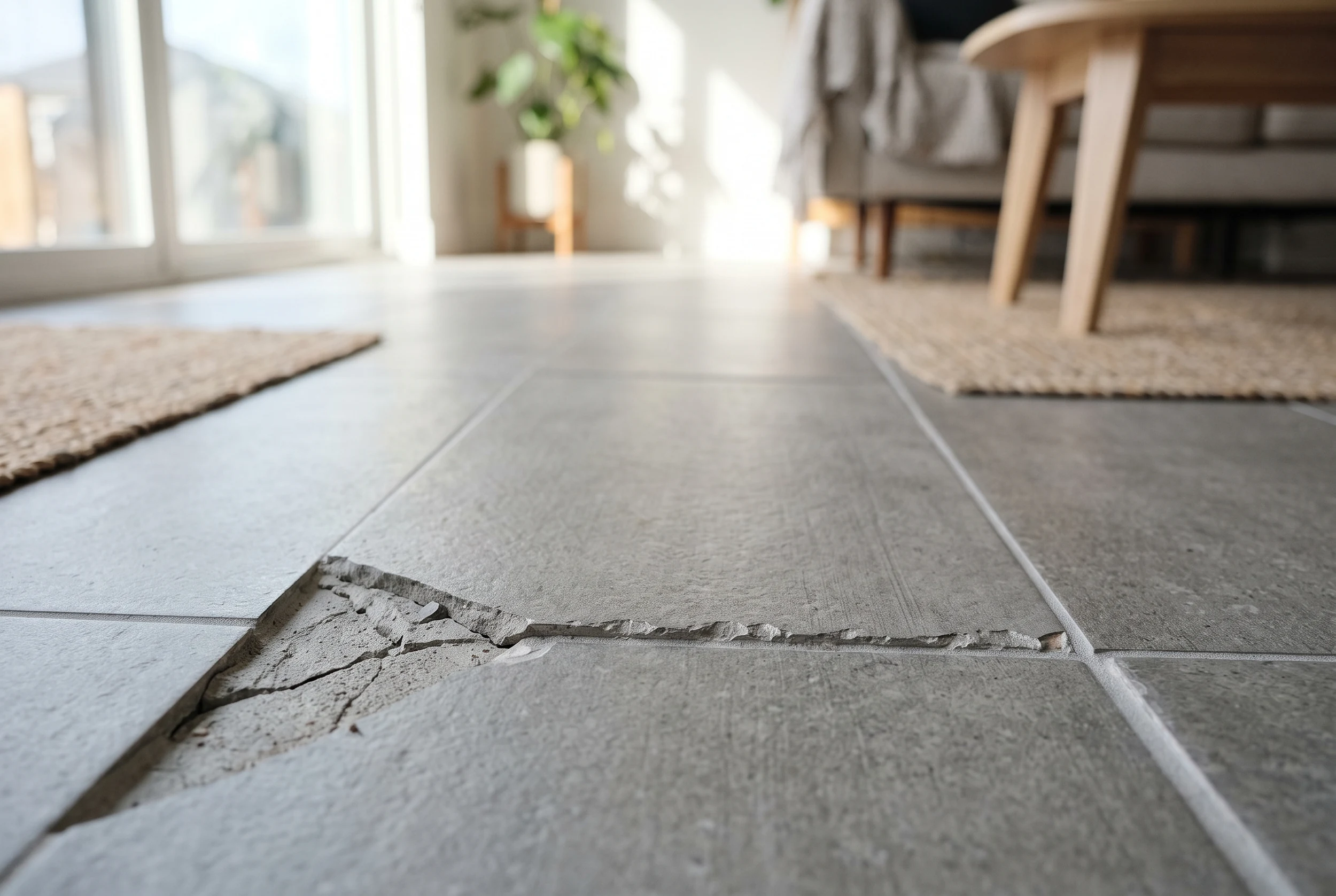
When the symptoms spread, repeat or come with moisture, the tile is usually telling you something is wrong beneath it. The subfloor, the mortar bond and the waterproofing are what hold a tile floor together, and once one of them fails, patching the surface only buys time. Homes around Trent Hills vary a lot in age and subfloor construction, so what’s under your tile can be very different from what’s under your neighbour’s. These are the signs that make us slow down and look deeper.
Tiles That Sound Hollow
Tap a tile with a knuckle or the handle of a screwdriver, and a solid tile gives a dull, firm sound while a hollow one sounds like a drum. Hollow means there’s a gap between the tile and the mortar bed, which happens when the mortar didn’t fully cover the back of the tile or when the bond has let go over time. One hollow tile near a doorway isn’t alarming, but a large patch of hollow tiles is a sign the bond has failed across a whole area. We set every tile with full coverage on the back for exactly this reason, because gaps are where cracks and loose tiles begin. If you tap your way across a floor and find hollow spots in several places, the section probably needs to come up and go back down properly.
Cracks That Run Across Several Tiles
A crack that travels in a line across multiple tiles and grout joints is a very different animal from a single cracked tile. That pattern usually means the floor beneath is flexing or shifting, and no amount of tile replacement will hold until that’s dealt with. A subfloor with too much flex will crack tile and grout over time no matter how well the tile was set. This is also a common story in older homes, where seasonal movement and years of settling can leave a floor that isn’t as stiff as it needs to be. In these cases we check the subfloor first, fix what’s causing the movement and only then set new tile on a base that can carry it.
Water Stains, Musty Smells and Lifting at the Edges
Dark stains in the grout near a tub, toilet or dishwasher, a musty smell that never quite goes away and tiles that lift at the edges are all signs that moisture is getting beneath the surface. The tile is usually just where the symptom shows up, while the real cause sits in the waterproofing, the caulking or the plumbing. If the moisture has been there a while, the substrate underneath may be water damaged, and that means pulling up the affected tile to see what’s really going on. Tile that’s lifting near a shower or tub should never be ignored.
Our post on water damage in your home explains what to fix and when to call a contractor, and it’s worth reading if you’ve spotted any of these signs.
How Do You Decide Between Repair and Replacement?
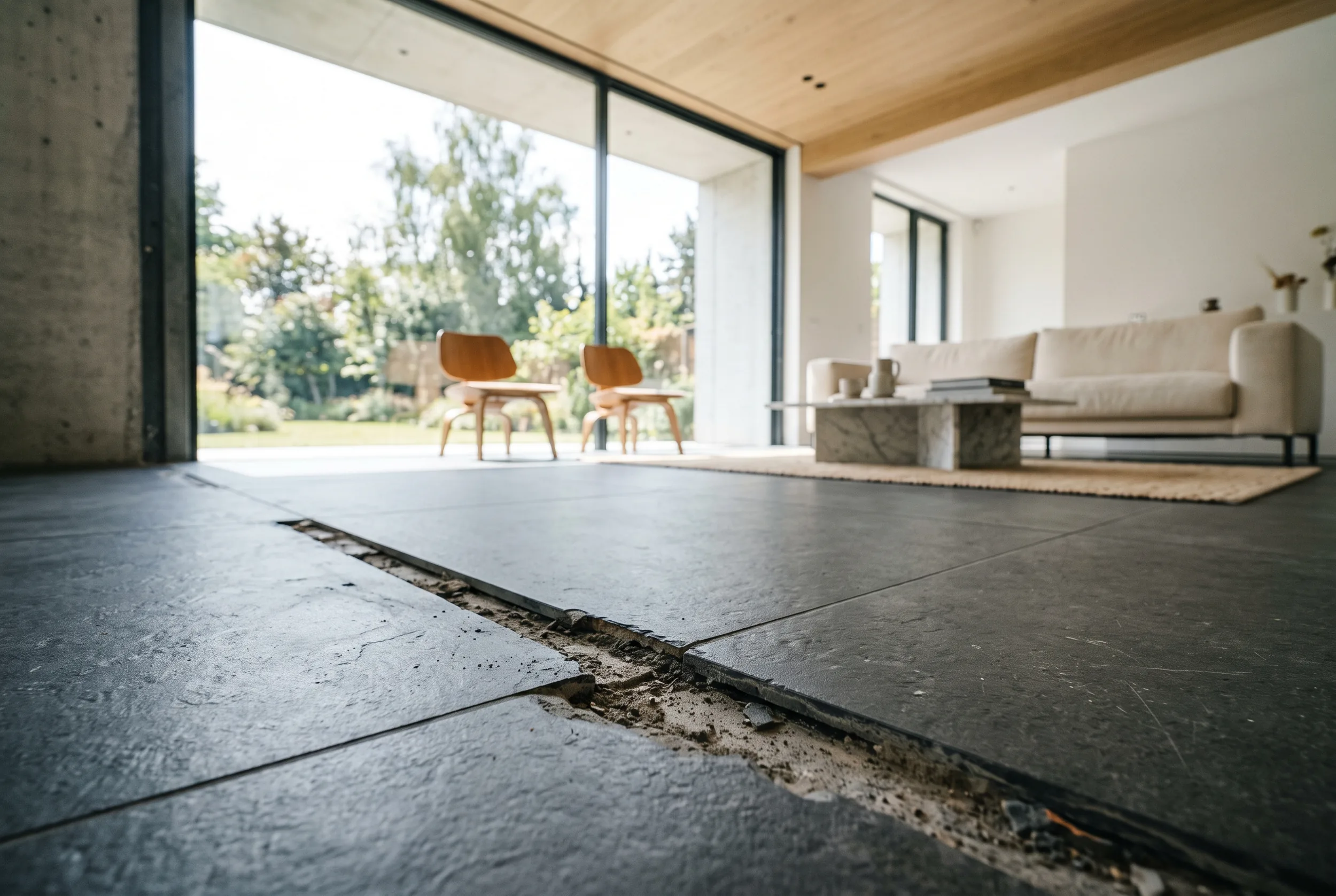
The decision comes down to how widespread the problem is and whether the cause has been found. A repair makes sense when the damage is local and the floor beneath is sound, while replacement makes sense when the problem covers a section, keeps returning or traces back to movement or moisture. The table below sorts the signs we’ve covered into the call we’d usually make. Every floor is different, so treat it as a starting point rather than a final answer. We always confirm on site before recommending anything.
| What You’re Seeing | What It Usually Means | Usual Call |
| One or two cracked tiles | Impact damage | Repair |
| A tile that clicks or shifts | Bond lost in one spot | Repair, reset the tile |
| Crumbling or stained grout | Age or minor movement | Repair, regrout or recaulk |
| Hollow sound across a section | Mortar bond failed over an area | Replace that section |
| Cracks in a line across tiles | Subfloor movement | Replace after fixing the base |
| Stains, smell or lifting tiles | Moisture under the tile | Replace after finding the source |
When a Repair Stops Making Sense
A repair stops making sense when you’re fixing the same area for the third time or when new problems keep appearing next to the old ones. At that point you’re paying to patch symptoms while the cause keeps working away underneath. Replacement costs more up front, but it’s often the cheaper path once repeated repairs and ongoing damage are counted in. We’ll tell you honestly when a repair will hold and when it won’t, since sending you home with a fix that fails in a year doesn’t help either of us.
If you want a sense of what a bigger tile job involves, our post on bathroom renovation costs in Trent Hills gives a useful picture of what goes into a larger bathroom project.
Matching Tile and Planning the Replacement
Replacing a section means finding tile that matches what’s already on the floor, and that’s not always easy if the original has been discontinued. Keep any spare boxes from the original installation, because the same batch will match in colour and size better than anything bought years later. If a match isn’t available, we can talk through options such as a clean transition, a border or replacing the full floor so the result looks intentional. Layout matters here too, since cuts, transitions and room edges all need planning before any new tile goes down. We map that out on site so there are no surprises once the work starts.

What Should You Do First When You Spot a Problem?
Start by figuring out how widespread the problem is, and keep water away from the area if moisture could be involved. Small problems are easy to handle when you catch them early, and the same problems can turn expensive if you let them ride through another winter. You don’t need special tools to check your floor, only a bit of time and some attention. Here’s how we’d suggest approaching it before you pick up the phone.
A Quick Walk Through Your Floor
Walk the room slowly and press on tiles with your foot, listening for clicks or shifting. Tap suspicious tiles to check for a hollow sound, and look closely along the grout lines, the tub and toilet edges and any doorways. Take a few photos of anything unusual, since they help us understand the problem before we visit. Make a note of when you first noticed each issue and whether it’s changing, because a crack that’s growing tells a different story than one that’s been the same for years. A few minutes of attention at this stage gives us a much clearer starting point.
What We Check When We Visit
When we come to look at a tile floor, we assess it on site so the recommendation fits your actual floor and not a generic assumption. We check for loose and hollow tiles, grout and caulk condition, signs of moisture and how much the subfloor flexes. If the tile is only loose or cracked in one area, we’ll tell you plainly that a repair is the right call. If the cause is deeper, we’ll explain what’s going on and what it would take to fix it properly.
You can read more about how we work on our tile installation and repair page, which covers both repairs and full installations.
If your tile floor is showing any of these signs, call us at (705) 977-4453 or email [email protected] and we’ll take a look at it with you. Catching a problem early is nearly always cheaper than waiting for it to fail.

