Tile installation cost comes down to three things: the material you pick, the shape of the space and how much work the subfloor needs before a single tile goes down. A straightforward ceramic floor in a small bathroom runs far less than a kitchen backsplash in natural stone, or a basement floor that needs the old flooring torn out and the subfloor leveled first. There’s no single price per square foot that covers every project, because the labor changes as much as the material does from one house to the next. We get some version of this question on almost every call, and homeowners want a number, which is fair, but the honest answer is almost always “it depends,” and we’d rather explain what it depends on than throw out a figure that falls apart the moment we’re standing in your bathroom.
What Actually Drives the Price of Tile Installation?
The price of tile installation comes down to three things working together: the material you choose, the condition of your subfloor and how the tile actually gets laid once the prep work is done. None of these decisions happen in isolation. A cheap material on a rough subfloor doesn’t save you the money you’d expect, because the labor to prepare that subfloor is often the bigger cost anyway. Understanding where the money actually goes helps you make smarter choices instead of chasing the lowest number on a quote.
Material Cost, From Ceramic to Natural Stone
Ceramic tile is where most budgets start, and for good reason. It’s the most affordable option per square foot and holds up fine in rooms that don’t see constant moisture or heavy foot traffic, like a powder room or a mudroom that isn’t tracking in snow every day.
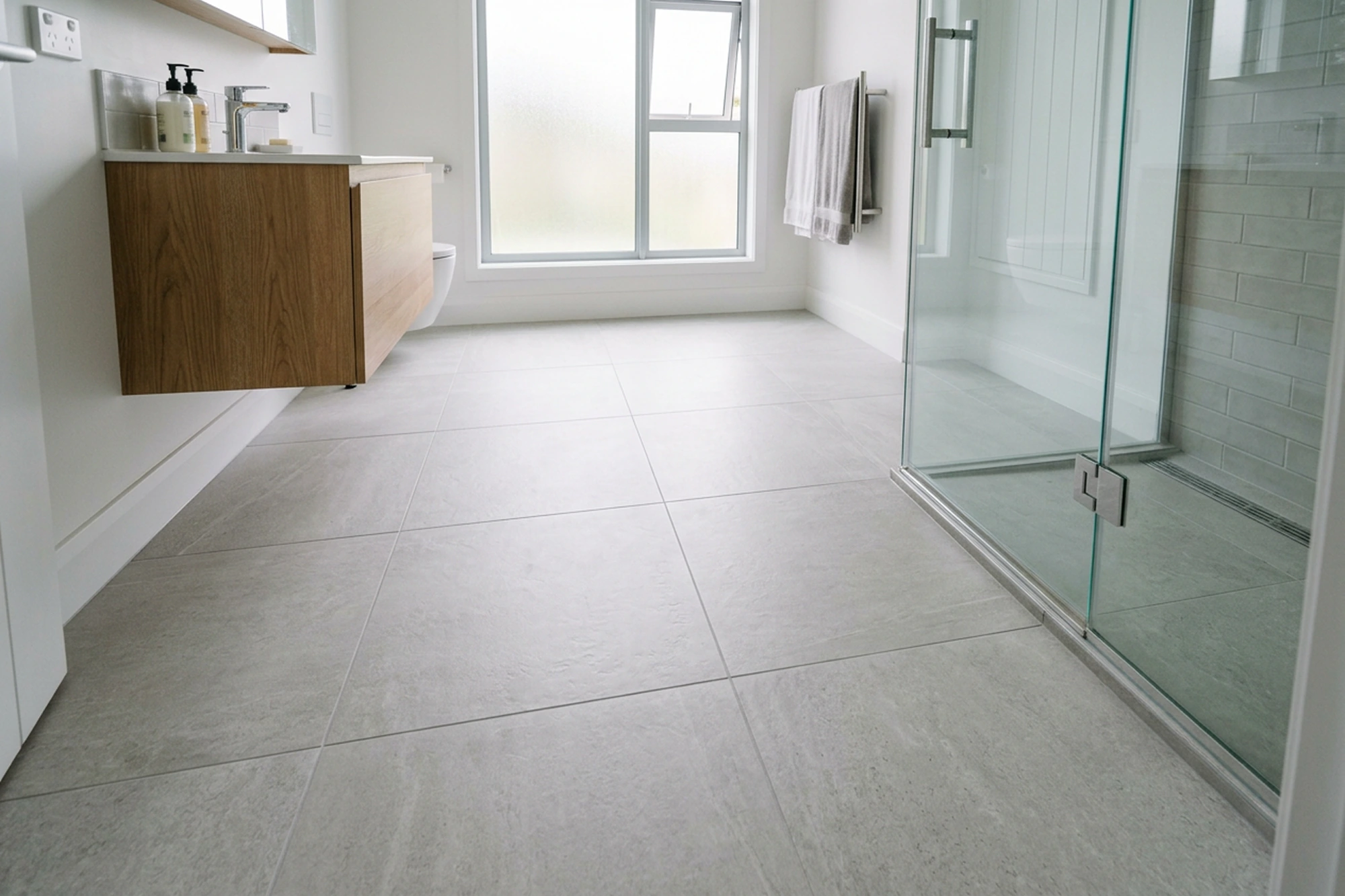
Porcelain costs more to buy, but it earns that difference back in durability, since it’s denser than ceramic and handles moisture noticeably better, which is exactly why you see it so often in bathrooms and kitchens where water and spills are part of daily life.
Natural stone, things like slate or travertine, sits at the top of the range because it’s heavier to handle, trickier to cut without chipping and it needs sealing that ceramic and porcelain simply don’t require. None of that makes stone a bad choice, it just means the price reflects the extra care the material demands from the moment it arrives on site to years down the road.
| Material | Relative Cost | Best For | Maintenance |
| Ceramic | Lowest | Low-moisture rooms, powder rooms, mudrooms | Minimal, reseal grout occasionally |
| Porcelain | Mid to high | Bathrooms, kitchens, high-traffic areas | Minimal, reseal grout occasionally |
| Natural stone | Highest | Feature walls, higher-end bathrooms and floors | Regular resealing of the stone itself |
Subfloor Prep and How the Tile Gets Laid
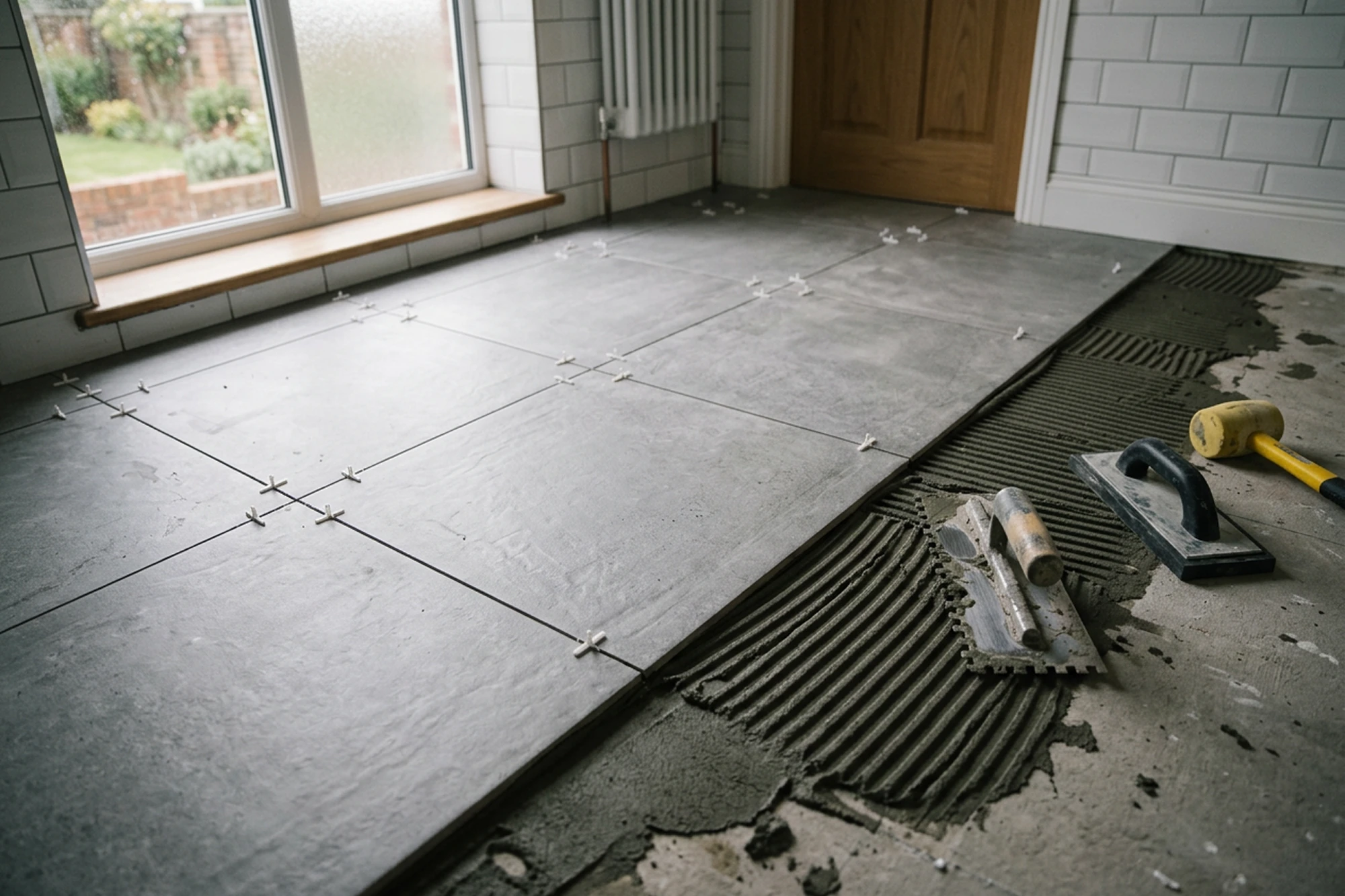
A flat, sound subfloor is the best case scenario for cost, because the crew can get straight to laying tile without stopping to fix anything first. Most existing floors aren’t quite that simple, and cracks, unevenness or an old layer of adhesive left behind from a previous installation all need to be addressed before new tile goes down, which adds hours before anyone even opens a box of tile.
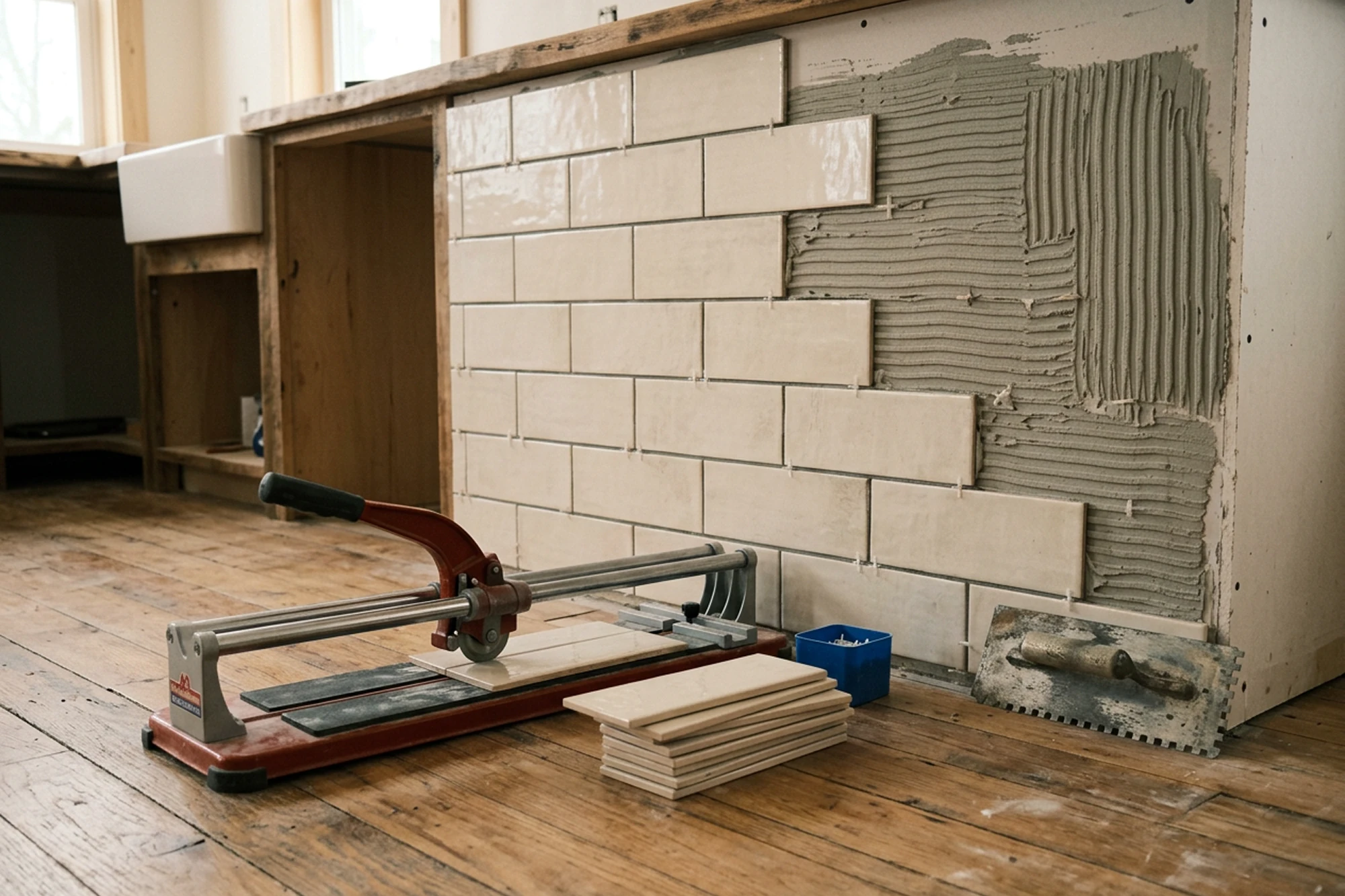
If there’s more than one layer of old flooring under what you’re standing on now, tearing it all out becomes its own separate job, and it’s one of the most common reasons a quote comes in higher than a homeowner expected going in. The layout you choose adds another layer on top of that, since a straight lay is the fastest and most affordable option because there’s less measuring and fewer cuts, while herringbone, diagonal layouts and mosaic patterns all take noticeably longer to install correctly, because every piece has to line up with the one next to it in a way a straight grid never has to.
Does a Bigger Room Always Cost More Per Square Foot?
Not necessarily, and this is where a lot of people get surprised, because room size changes the total bill without reliably lowering the price per square foot the way people assume it will. A small bathroom floor can actually cost more per square foot than a much bigger room, simply because of how much cutting is involved, since toilets, vanities and shower bases all interrupt a straightforward tile run and demand more precise cuts relative to the total area being covered.
A crew working around three fixtures in a small space is doing more detailed work, square foot for square foot, than a crew laying tile across an open basement floor, where full tiles get laid in longer, uninterrupted runs with far fewer cuts to slow things down. Fewer cuts means less time spent measuring and fitting pieces around obstacles, and that efficiency is exactly where the per square foot savings come from. So don’t assume a small project is automatically the cheaper one, because sometimes it’s the opposite.
Why Do Bathrooms and Kitchens Carry a Higher Price Tag?
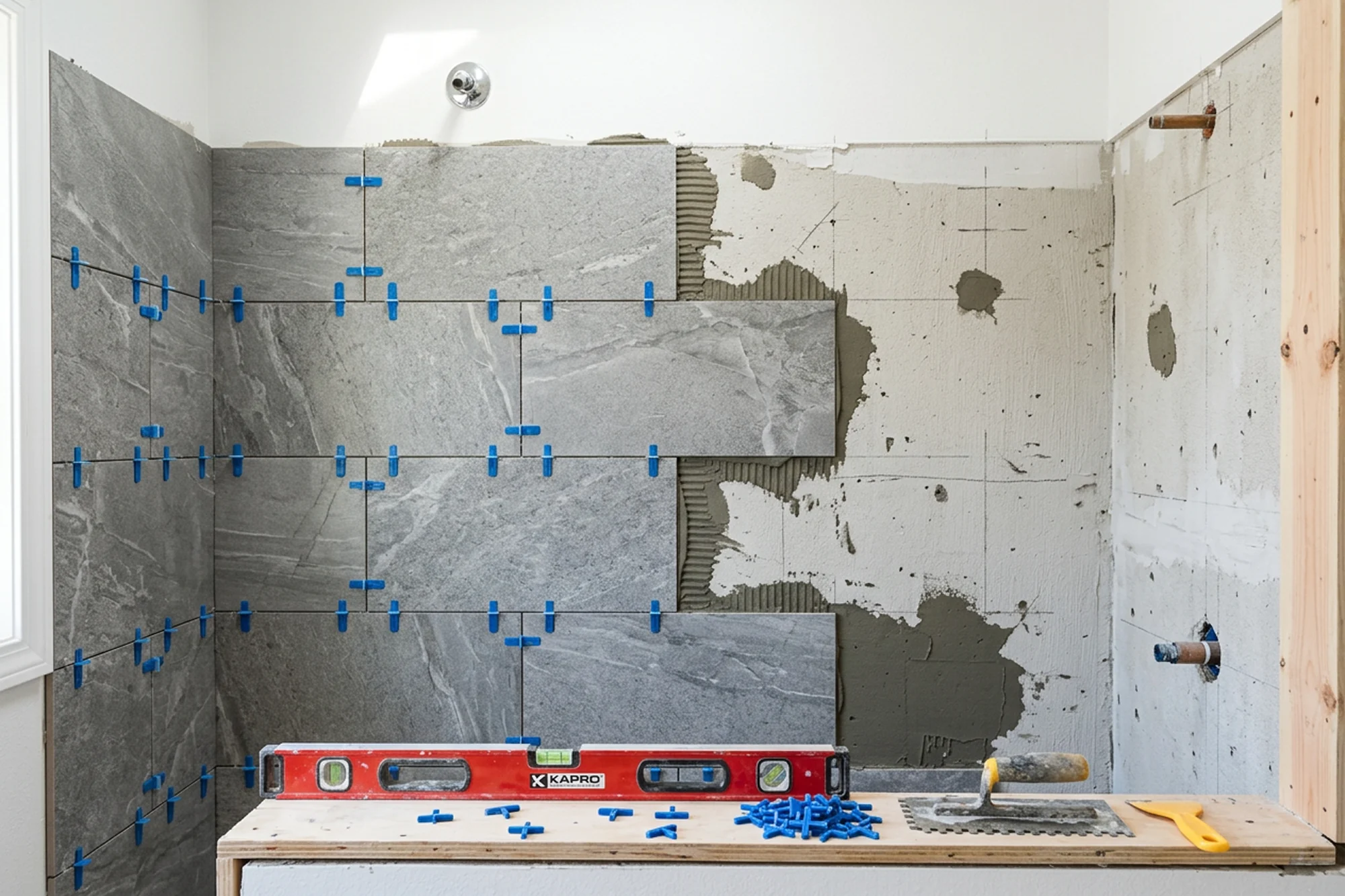
Bathrooms and kitchens cost more mainly because of two things: waterproofing and the number of cuts needed around fixtures. Any shower floor or tub surround needs a waterproof membrane installed underneath the tile before installation even begins, and that’s a step a hallway or a basement floor simply doesn’t require, which adds both material and labor cost. Skip it, or rush it, and you’re looking at a much bigger repair down the road once water finds its way where it shouldn’t. Kitchens bring their own complexity around cabinets, islands and appliances, where tile has to be measured and cut precisely to fit into tight, irregular spaces, and that precision takes more time than laying tile across an open floor.
If you’re weighing a full bathroom renovation or a kitchen renovation against a standalone tile job, it’s worth talking through the full scope with us first, since tile is often just one piece of a bigger project, not the whole story.
How Does Timeline Change What You Pay?
Timeline affects cost mostly through how much prep work happens before the tile itself goes down, not through the number of days a crew spends on site. A same-day tear-out and install on a small, straightforward bathroom floor is about as quick as tile work gets, since the subfloor’s already in good shape, the layout is simple and there’s nothing hiding underneath that needs fixing first.
A project that needs old tile removed, a subfloor dried out or leveled and a waterproof membrane installed before any tile is set is going to take considerably longer, even if the finished square footage looks identical to the quick job next door. Weather and material availability play a role too, especially with natural stone or specialty tile that isn’t sitting on a shelf locally, and rushing any of this rarely saves money, since skipping proper drying time on a membrane, or setting tile before a subfloor has actually cured, is one of the most common reasons tile fails early.
If you’re comparing costs across other renovation types, our post on bathroom renovation costs in Trent Hills breaks down what drives pricing on the plumbing and fixture side.
What Does Tile Cost You After Installation?
The cost of tile doesn’t end once installation’s finished, and how much you spend on it later mostly comes down to how well the grout was sealed and whether you chose a material that needs ongoing upkeep. Grout is porous, and over time it picks up moisture, dirt and whatever else ends up on your floor, so sealing it properly at installation, and resealing it every couple of years, is a lot cheaper than letting it stain or crack and having to regrout a section later.
If you went with slate, travertine or another natural stone, resealing isn’t optional the way it is with grout on ceramic or porcelain, since stone is naturally porous and without regular sealing it absorbs moisture and stains more easily than it did on day one. It’s worth factoring that ongoing care into your decision up front, not treating it as a surprise a year or two down the line.
Repair or Replace? How to Tell
It comes down to how much damage there actually is, and what’s happening underneath the tile you can see. A handful of cracked or loose tiles scattered across an otherwise solid floor is usually a repair job, and it’s the cheaper route as long as the subfloor underneath is still sound, so there’s rarely a reason to tear out a whole floor over a few tiles that came loose.
Widespread cracking, grout failing in multiple places or tile that sounds hollow when you tap it usually points to something bigger going on underneath, most often moisture or subfloor movement, and patching those spots one at a time just delays the inevitable and often costs more in the long run than tackling it properly once. We’ll always tell you honestly which situation you’re in, because we’d rather lose a bigger sale than talk you into replacing a floor that only needed a repair.
Every tile job we quote gets priced against the actual condition of your space, not a flat number pulled off a price list that has no idea what’s under your floor. If you want a straight answer on what your project will run, call us at (705) 977-4453 or email contact@renossance.ca and we’ll walk the space with you before we put a number on paper.

