Your eavestroughs need repair before winter if they sag, pull away from the house, overflow in the rain, drip at the seams or leave water stains and puddles below them. Any one of those signs means water isn’t leaving your roof the way it should, and winter makes that problem much worse. Water that sits in a damaged eavestrough freezes, adds weight and can tear a section loose or push meltwater back under your shingles. Catching these signs in the fall gives you time to fix them while the weather still cooperates.
Most homeowners don’t think about their eavestroughs until something goes wrong, and that’s understandable, since they sit high up and quietly do their job most of the year. The trouble is that the warning signs are easy to miss from the ground unless you know what to look for. We’ll walk you through the signs we run into most often, what each one usually means and how to decide between a repair and a full replacement. Take a walk around your house with this post in hand and you’ll know exactly where you stand.
Why Do Eavestroughs Matter So Much in Winter?
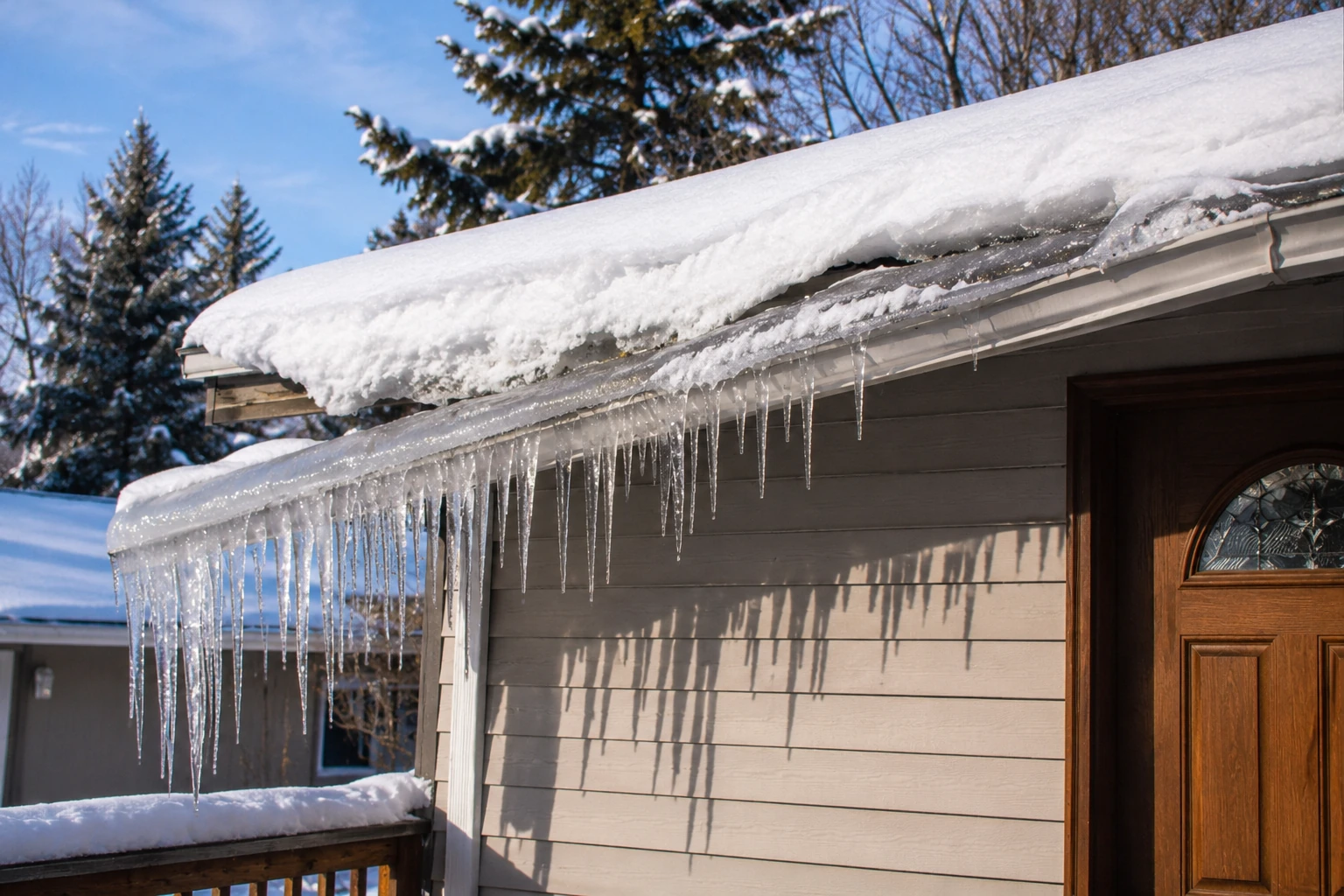
Eavestroughs matter in winter because they control where snowmelt goes, and in Ontario snow melts and refreezes on and off for months. On a sunny afternoon, snow on the roof melts and runs into the eavestroughs, and if they’re working, that water drains away through the downspouts. If they’re clogged, damaged or sloped the wrong way, the water sits and freezes, and the next round of meltwater has nowhere to go. That’s when you get heavy icicles, ice dams along the roof edge and water backing up under the shingles. Healthy eavestroughs are one of the simplest ways to protect your roof, your walls and your foundation through the coldest months of the year.
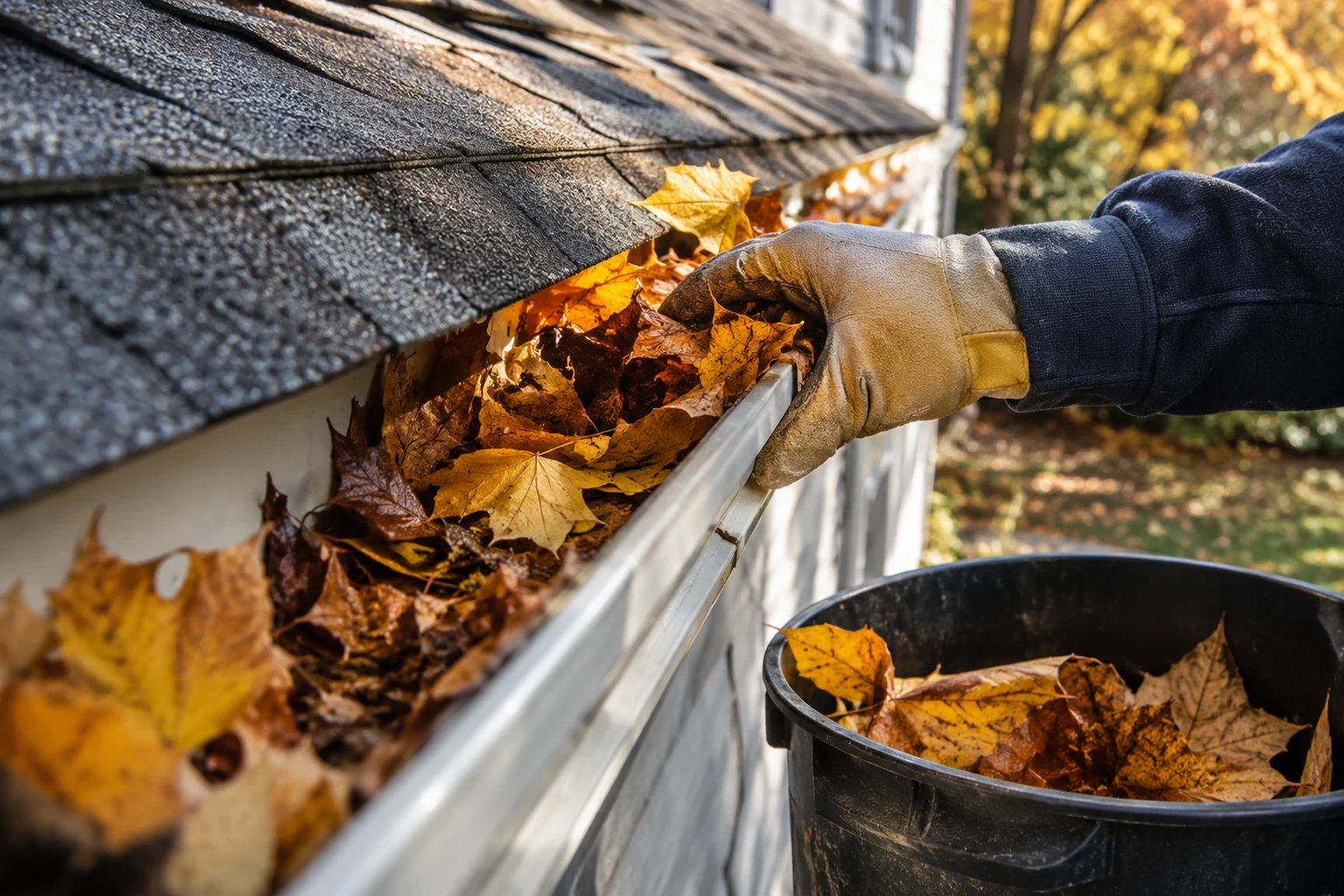
What Are the Signs Your Eavestroughs Need Repair?
The signs fall into two groups: things you can see on the eavestroughs themselves and things you can see on the house and ground below them. Some show up best on a dry day, while others only appear when it’s raining, so it’s worth doing a quick check in both conditions. Here are the six signs we see most often and what each one tends to tell us. Even one of them is worth taking seriously before the snow comes.
Sagging or Pulling Away From the Fascia
A section that dips in the middle or has pulled away from the board it’s fastened to is the most obvious sign of trouble. It usually means the hangers have loosened, rusted or let go, or that the fascia board behind them has started to rot and can’t hold a fastener anymore. A sagging section also collects water instead of draining it, which adds weight and makes the sag worse. In winter that standing water turns to ice, and a section that’s already pulling loose can come down completely under the load.
Water Spilling Over the Edge
Stand outside during a good rain and watch your eavestroughs for a few minutes. If water is pouring over the front edge instead of running toward the downspouts, something is stopping it. Most of the time it’s a clog of leaves, seeds or shingle grit, but it can also mean the eavestrough has lost its slope or the downspout is blocked further down. Overflowing water lands right beside the foundation, which is exactly where you don’t want it.
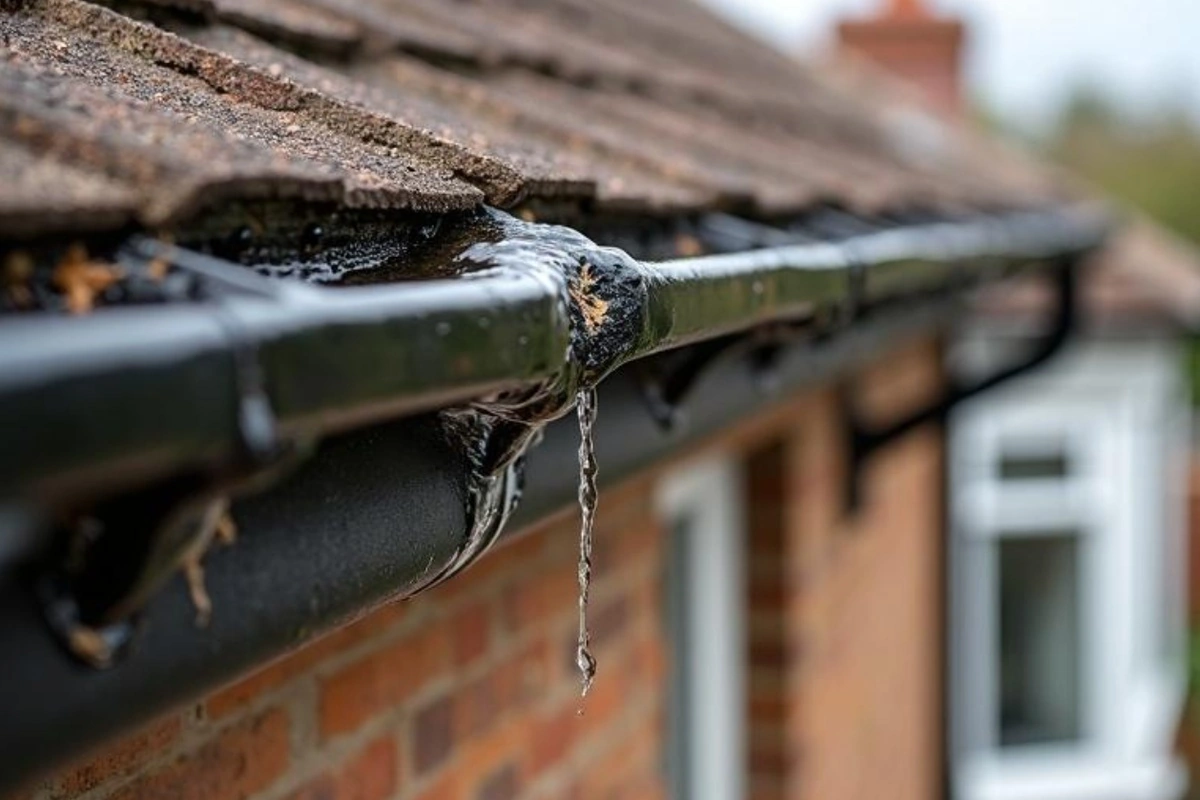
Drips and Leaks at the Seams
Watch the joints and corners closely, because that’s where most leaks begin. Sectional eavestroughs are joined together every few feet, and the sealant at each joint dries out and cracks over time. A steady drip from a seam during rain is a clear sign that the sealant has failed. Left alone, that drip wears at the fascia, stains the siding and in winter builds into icicles that hang off the joint.
Rust, Cracks and Peeling Paint
Rust spots, small holes and hairline cracks along the bottom of an eavestrough tell you the material itself is wearing out. Peeling paint on the eavestrough or on the fascia behind it often means water has been sitting where it shouldn’t for a while. A small crack can sometimes be patched, but spreading rust or several cracks along one run usually means that section is near the end of its life. It’s worth checking the underside of the eavestrough as well as the inside, since that’s where corrosion often shows first.
Stains, Rot and Puddles Below
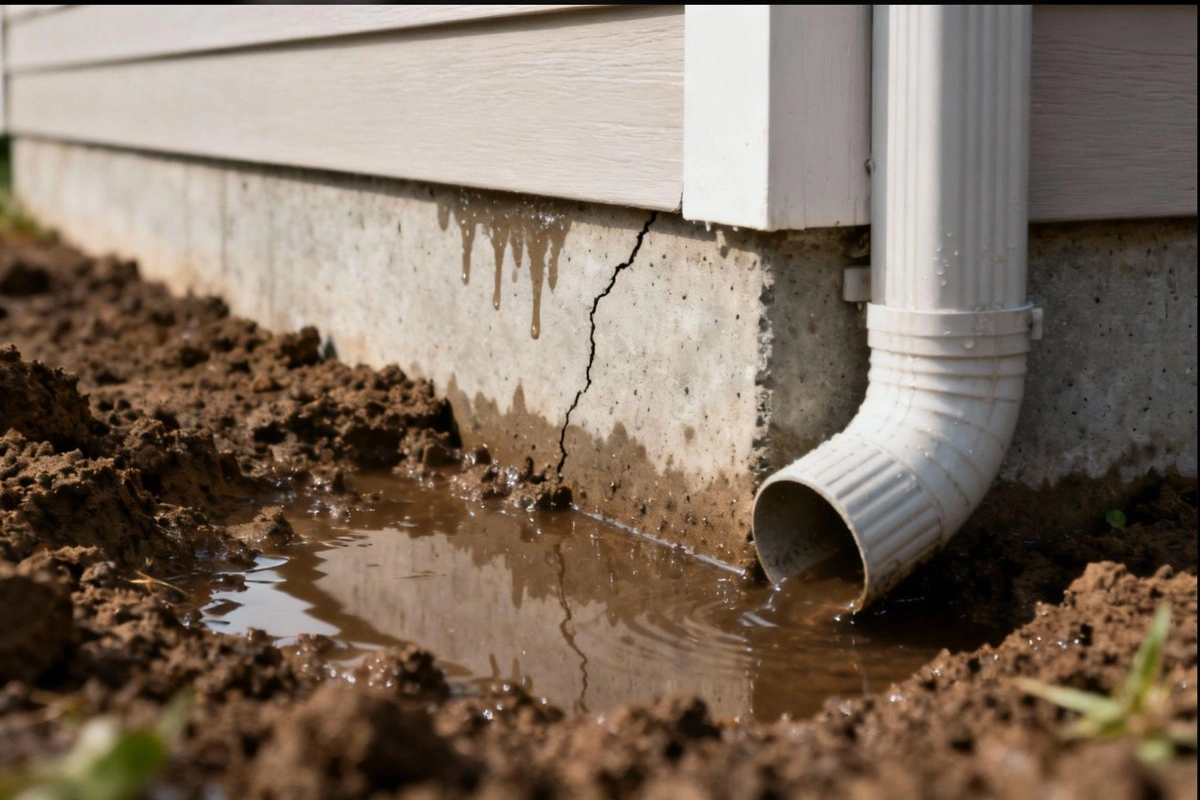
Sometimes the clearest signs aren’t on the eavestrough at all but on the house and ground beneath it. Look for water stains or streaks on the siding, soft or discoloured fascia boards and peeling paint on the trim. On the ground, watch for puddles that form along the foundation after rain, soil that has washed away below the roofline or mulch that keeps getting scattered. Inside, damp spots in the basement along an exterior wall can trace straight back to an eavestrough that isn’t doing its job.
Downspouts That Don’t Drain
Downspouts get overlooked because they’re easy to take for granted, but a blocked one makes the whole eavestrough fail. Tap along the length of each downspout and listen, since a clogged section sounds dull and solid instead of hollow. Check where each one empties, too, because a downspout that drops water right at the base of the wall undoes most of the work the eavestrough just did. A crushed elbow at the bottom or an extension that’s come off and gone missing is a small thing to fix in the fall. Left alone, that same blockage freezes solid in winter and turns the downspout into a column of ice.
If you’ve already spotted signs of moisture inside, our post on water damage in your home explains what to fix and when it’s time to call a contractor.
What Happens If You Leave It Until Spring?
Leaving eavestrough problems until spring usually means paying for more than just the eavestrough. Every freeze and thaw adds stress to a damaged section, and ice can bend, crack or tear it away completely. Meltwater that can’t drain backs up under the shingles at the roof edge, where it can soak the roof deck and leak into the walls or ceiling. Water that spills over the edge all winter keeps soaking the ground next to the foundation, and that’s often when basement leaks start to show up. By spring, a repair that would have taken an afternoon in the fall can involve the fascia, the roof edge and the inside of the house.
We covered what that spring cleanup looks like in our post on spring eavestrough repair, and it’s a good reminder of why fall is the easier time to deal with it.
Should You Repair or Replace Your Eavestroughs?
Repair makes sense when the problem is limited to one spot, and replacement makes sense when the problems are spread across the system or keep coming back. A single loose hanger, one leaking seam or a clog is a straightforward repair. Long runs that sag in several places, widespread rust or eavestroughs that have been patched over and over are usually better replaced. The condition of the fascia matters too, because new eavestroughs need something solid to fasten to. The table below sums up how we usually think about it, though we always confirm on site before recommending anything.
| What You See | Likely Cause | Usual Fix |
| Water overflowing in the rain | A clog or a blocked downspout | Clean out and flush |
| One sagging section | Loose or failed hangers | Repair and refasten |
| A drip at a seam or corner | Failed sealant at the joint | Repair and reseal |
| Rust or cracks along a run | Material wearing out | Replace that section |
| Sagging in several places | Failing hangers or soft fascia | Replace and repair the fascia |
| Leaks that return after repairs | System near the end of its life | Full replacement |
When Replacement Is the Smarter Spend
Replacing eavestroughs costs more up front, but it often costs less over time than paying for repair after repair. If you’ve had the same run fixed more than once, the next leak is usually not far behind. Replacement also gives you a chance to correct problems that were built in from the start, like downspouts in the wrong place or sections that never had enough slope. We’ll always tell you honestly which way we think you should go, even when the answer is the smaller job.
Are Seamless Eavestroughs Worth Considering?
If you’re replacing your eavestroughs anyway, seamless eavestroughs are well worth a look. Instead of being joined together from short sections, they’re formed in one continuous length to fit each run of your roofline, so the only joints are at the corners and downspouts. Fewer joints means fewer places for sealant to fail and fewer spots for leaks to start. They also look cleaner on the house, since there are no seams breaking up the line along the roof edge. We install and repair them across our service area, and we’re happy to talk through whether they make sense for your home.
You can read more on our seamless eavestroughs page, including how we approach an installation from start to finish.
What Can You Check Yourself This Weekend?
You can check most of what matters from the ground in about half an hour, with no ladder needed. Walk the full perimeter of the house and look along each run of eavestrough for sagging, gaps at the fascia and visible rust or cracks. Look down at the siding, the trim and the soil along the foundation for stains, rot and washed out spots. If it rains while you’re home, step outside and watch where the water goes, especially at the corners and downspouts. Take photos of anything that looks wrong, since they help us understand the problem before we visit.
While you’re walking the house, our fall home maintenance checklist covers the roof, siding, decks and everything else worth checking before the snow arrives.
If the damage has reached the roof edge, our roof repair work means we can look at both during the same visit.
If you’d rather leave the ladder work to someone else, or if what you find looks bigger than a quick fix, call us at (705) 977-4453 or email [email protected]. We’ll take a look and give you a straight answer before winter sets in.

